The Housing and Planning Bill will spell the end of public housing in this country.
It is easily forgotten that council housing – more usually now known as social housing to include housing association homes – was one of the pillars of the post-war Welfare State.
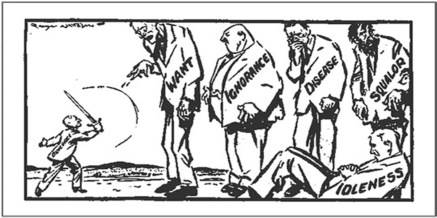
And it is being destroyed.
Along with scores of working class communities up and down the country, with London hardest hit.
The Housing and Planning Bill does not stand alone. Benefit cuts will also play their part in destroying our communities and forcing families out of their homes.
The Bill involves different constituencies of interest who need to be brought together to oppose it. Each of its major provisions is an attack on public housing; taken together the whole signals total destruction.
The suppliers of public housing
- All existing housing estates will be designated as ‘brownfield’ sites for redevelopment – for which in principle planning permission will be automatically granted and local planners won’t be able to demand anything other than technical conditions. This opens the way to the wholesale redevelopment, demolition and privatisation of all existing housing estates. (The designation ‘brownfield’ was previously used to describe contaminated, polluted sites – is this what the Government thinks of housing estates and their tenants?)
- Planning authorities will no longer be able to oblige property developers to build/fund homes for social rent. Section 106 of existing planning laws (which has already been substantially watered down) will be replaced with a duty to build discounted starter homes for sale (to first time buyers under 40), capped at £450,000 in Greater London and £250,000 elsewhere. Buyers would need to be on double the average wage to afford these homes. This is a state subsidy to private investors who can then sell at full market value within 5 years.
- Local authorities will be obliged to sell their ‘high value’ property as they become vacant, thereby transferring up to a third of public housing and land into private hands. There is no guarantee that the money raised will be used to build new houses in the same area/region. There are no exemptions (eg. specially modified homes) and there is no definition of high value in the Bill – that will be define in later regulations.
- Local authorities will be levied to pay for the discounts of Housing Association Right to Buy tenants regardless of whether they have sold their ‘high value’ properties.
- Housing Association income will be reduced by £3.85bn. over 4 years through the 1% reduction in rents, which has ripped up business plans and jeopardised secured loans. The OBR estimates this will result in 14,000 fewer affordable homes being built.
Existing tenants
- Pay to Stay – tenants with a gross household income of £40,000 London, £30,000 elsewhere, will be means tested and charged market rents. Landlords will have access to tax records. This will be compulsory for local authorities, and the receipts will go to the Treasury. It will be voluntary for housing associations, who will be able to keep the receipts, thus giving them an incentive to implement it. Pay to Stay will hit working families on as little as the London Living Wage. It will drive essential workers out of our cities. (See also here.)
- Right to Buy – still compulsory for local authorities, with a duty to replace the homes they sell (not that this happens). It will be voluntary for housing associations, who will have no duty to replace locally and, where they do, can replace with the misnamed ‘affordable 80% of market’ rents, shared ownership or for sale. HA discounts will be paid for by that compulsory sale of local authority ‘high value’ housing. Any shortfall will come from the taxpayer. The discounts of up to £104,000 in London, £77,000 elsewhere, will be ‘portable’ and can be used to buy property elsewhere (such is the inequality in prices, the London discount will be more than the total cost of buying a house on Merseyside). Yet another state subsidy to private buyers.
- Rents will be cut by 1% (unless you’re hit by Pay to Stay). Service charges will undoubtedly rise to compensate.
Potential tenants
- Secure tenancies will be phased out and changed to fixed term tenancies of between 2-5 years. Compulsory for local authorities, voluntary for housing associations.
- This will also apply to all new tenancies, including existing tenants who transfer, mutually exchange, or inherit (including widow(er)s).
- Tenure will be reviewed at the end of the period which means that the smallest change in circumstances could lead to the loss of your home. There’ll be little point in looking after it, being involved in your community or getting promoted.
The differences between voluntary and compulsory in respect of local authorities and housing associations comes down to the fact that the Treasury wants to reverse the recent ONS classification of housing associations as public sector bodies, whose £60bn debt must be added to government debt, by deregulating them and then privatising them by selling off the £44bn in capital grants they have received from the taxpayer over the past three decades. This would amount to a decrease in public sector debt (‘the deficit’) of more than £100bn. (Applying the compulsory rent reduction to HAs suggests George Osborne hasn’t quite worked out this deregulation thingy yet!)
Housing Benefit
- Bedroom Tax (spare room subsidy) means HB is reduced by 14% for one spare bedroom, 25% for two or more, and is unchanged.
- The Benefit Cap will be reduced from April 2016 to £442 a week in London and £385 a week outside London, making social housing and even temporary accommodation rents unaffordable for families with several children.
- Housing Benefit is to be capped at the Local Housing Allowance maxima for social housing tenants as well as private tenants. This means HB for all social tenants (including pensioners) will be capped at the level of housing need, so someone in a 3 bed who only ‘needs’ a 1 bed will have HB capped (thus pensioners will now get bedroom taxed by the back door). No account will be taken of support costs in refuges and hostels, which are already closing.
- Shared Accommodation Rate will be extended to social housing so that single under 35s (previously under 25s) will only receive HB for a room in a shared house/1 bed.
It is worth noting that cuts in housing benefit have a twofold effect: (i) for the claimant they mean the choice between eating, heating or paying the rent, getting into arrears and then facing eviction, being deemed intentionally homeless and then ending up on the street; and (ii) the landlord who loses a substantial amount of previously guaranteed income/subsidy which could have been invested in the provision of more social housing.
None of this will do anything for the 1.3 million households on housing waiting lists. It will not increase the stock of available housing – not family homes at reasonable rents, nor specially adapted flats, nor sheltered housing, nor warden supported refuges or hostels – none of which are provided by the private sector – and it could throw millions onto the streets. Homelessness has risen by a third under Cameron’s premiership. How much higher will it go?
Where are the screams of outrage?
The Government’s answer to the increase in private renters suffering exploitation at the hands of Buy to Rent and Right to Buy landlords is not to deal with it by capping rents and providing secure tenancies but to make social housing tenants suffer the same unaffordable rents, insecure, overcrowded and squalid conditions; not to build the decent homes we so desperately need to be able to rent, but to sell off and demolish what social housing we currently have.
Since Thatcher introduced Right to Buy in the 1980s four out of ten council homes sold under the policy are now in the hands of private landlords. How many more homes will be privatised?
The demonisation of council tenants as benefit scroungers and criminals has been going on for decades and we have few allies beyond the world of housing professionals.
The Tories know this and are taking full advantage. The ‘scum of the earth’ are to be driven out of our cities so that the space we are taking up can become yet another piece of profitable real estate, for sale to the highest bidder.
But it doesn’t have to be like this!
We can Kill the Housing Bill! It potentially affects millions – not just the 4 million social renters, but the millions waiting for public housing, on the waiting lists – 22,000+ here in Lambeth – or stuck in crap private rentals, young people – and now the not so young – who can’t afford to leave home or start a family – and their parents!
Let’s join together to demand truly affordable, decent and secure housing for everyone.
And let’s start by demanding the Labour Party makes as big a fuss about this as they did about tax credits. They won that one! They can win this!
“Everyone has the right to a standard of living adequate for the health and well-being of himself and of his family, including food, clothing, housing and medical care and necessary social services, and the right to security in the event of unemployment, sickness, disability, widowhood, old age or other lack of livelihood in circumstances beyond his control.” (Article 25 of the Universal Declaration of Human Rights)
Joan Twelves, 31 December 2015
Joe Halewood has blogged more on all this at https://speye.wordpress.com/2015/12/31/social-housing-in-2016/


The more I read this, the more angry I get. But getting angry solves nothing. The only thing that can overturn this means of SOCIAL CLENSING is action! I am a working woman living in social housing. I am on a considerably decent wage, but even that wouldn’t be enough to enable me to afford my rent if this unreasonable bill was to go ahead. And to think of working families trying to keep roofs over their heads and the elderly. Does this government really want people to choose between eating, heating and living somewhere? This coming from a government who insist that we need to help ourselves, when in fact, that ability is being eroded.
LikeLike
Where is the petition to sign to ‘Kill The Bill’?
LikeLike
Where is the petition on this
LikeLike
I was fortunate enough in the 80s to get a 1 bedroom flat in a high rise block in my local area near my family and friends, a few years later after meeting my now husband, who i may add left Scotland for a better future in London, (in Norman Tebbits’ words he got on his bike and looked down South for employment) when we first met and lived together we were both working, me with British Telecom and my husband was pipe fitting, after the birth of our first child i gave up work as a stay at home Mum and then 3 years later gave birth to another daughter, money was very tight, four of us living on one wage, we also needed larger accommodation now our children had arrived so when our eldest was 9 we were very fortunate to be able to get a 2 bedroom property in the same high rise block on the 19th floor, something families didn’t want because of the height, the property was in dire straits and needed a lot of work done to it but there was not enough money coming in for us to afford a better home so as our children were now both at school i went back to work washing up in a School Kitchen my husband also decided that we needed a more secure future as far as work was concerned so signed up to do the Knowledge of London and become a London Taxi Driver, after 4 years of very hard work my husband passed his knowledge and started driving a taxi, we thought at the time this would enable us to buy our own property in London where we both work and wanted to stay but as the property in London was and still is overpriced for normal working class families we realised we couldn’t afford it so we spent our time and money putting it into our council home, new bathroom, kitchen etc my husband has done every bit of work in our home with no council help at all just the yearly check on our boiler! realising how much money we had put into the property and having lived here for 30 years when the council offered us the Right to Buy we decided to look for a mortgage as it was a way of us staying in London near our family and jobs and i had luckily through hard work been promoted to Catering Manager so we had some extra money coming in, but getting a mortgage was proving harder than we thought, no one would loan us the money on a 19th floor 1970s concrete building so we resided with the fact we’d have to carry on renting as we didn’t want to move away, it’s our home, or so we thought, if the government are going to insist on charging people obscene amounts of rent how are they going to ever have anything, the Cab trade is also dwindling due to interference from our government allowing the likes of Uber etc (another debate i know) but all these things are affecting not just my families lives but others, people may think oh they’re ok both working they can afford it, but just because you work doesn’t mean you’re living a life of luxury we are lucky to be able to afford our bills have heat and food on the table no government has given us that we’ve done it ourselves and to be honest it doesn’t just anger me it’s making me worry for our future, something i didn’t think i’d ever have to worry about when i was nearing my 60s, what is this government trying to do? cleanse the cities of working class people, the very people that have given Britain its backbone!
LikeLiked by 1 person
Your story, Karen, is precisely why we have to oppose this Bill and get our stories out there.
LikeLike
Thank you Joan, is there a petition to sign?
LikeLike
I haven’t been able to find an online one – there’s some small ones on specific aspects of the Bill, eg. length of tenure, and Defend Council Housing has a paper one. If I (or anyone else!) find a link, I’ll post it here.
LikeLike
Thank you
LikeLike
Here’s a 38 degrees petition about ending the lifetime tenancies
https://you.38degrees.org.uk/petitions/stop-david-cameron-ending-lifetime-council-housing?bucket&source=facebook-share-button&time=1451728196
LikeLike
Thank you Joan
LikeLike